An Old Man in My Uncle's Village Showed Me a 5 Minute Morning Ritual That Cleared My "Heavy Head" and Changed My Blood Pressure Readings in 7 Days... I'm Sharing Everything He Told Me
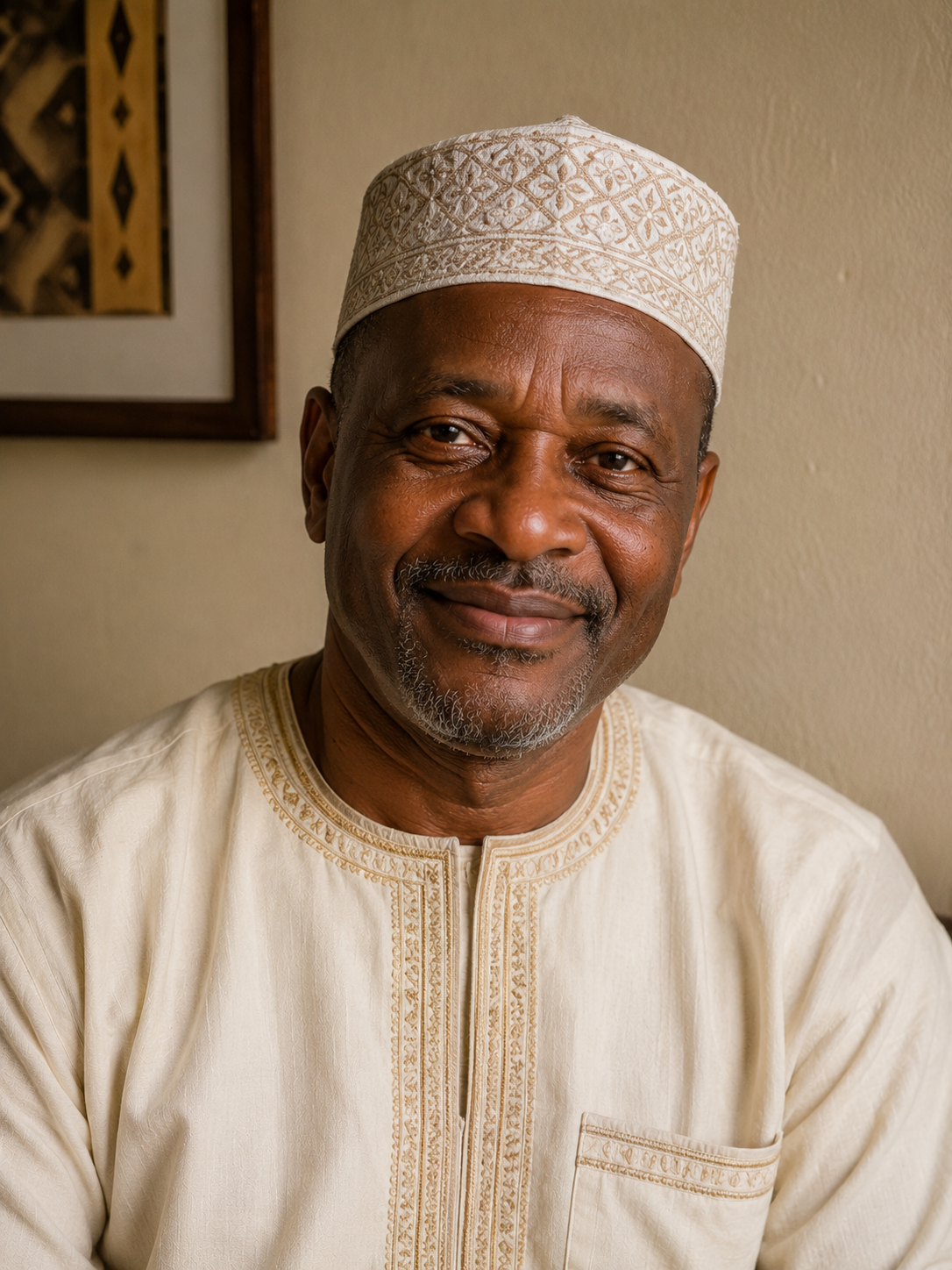
If you're reading this, I already know part of your story.
You wake up most mornings with it. That low, pressing weight behind your ears. That tightness at the back of your skull that says something is running too hard, too fast, without your permission.
Not every morning is terrible. Some mornings you almost forget. And then you sit up too quickly or walk up one flight of stairs and your vision goes slightly soft at the edges for two or three seconds and your whole body goes cold.
"Is today the day?"
You get up. You stand in the bathroom. You look at yourself in the mirror. A man who built something real from nothing. A man who carries people. The one everyone calls when anything goes wrong school fees, rent, your mother's monthly upkeep, your brother's family situation. Everything moves through you.
And your heart is working like an overloaded generator trying to power a building it was never designed to carry alone.
You've sat in boardroom meetings feeling like your skull is full of hot water, smiling and nodding and signing things while part of your brain runs a quiet calculation you never want to finish. You've driven through city traffic with one hand on the wheel and the other pressing against your temple, telling yourself it's the stress, just the stress, it'll pass.
You tried the tasteless food. Boiled everything. No salt. No oil. Eight weeks of food that tasted like cardboard, and at the end of it your reading had moved a handful of points. You nearly cried sitting there looking at that machine.
Meanwhile your heart the thing carrying you through every day is doing something you can feel but cannot stop. And the fear that follows you has nothing to do with the pain itself.
It's the image you can't shake.
Your children standing around a hospital bed. Your wife's face. The man who held everything together gone. Before he finished what he started.
"Who will take care of them if I go?"
That thought has followed you into your office, into your prayers, and into your sleep.
Drop everything you're doing right now and read every word of what I'm about to say.
My name is Emeka.
I want to be upfront about who I am. I'm not a doctor. No medical training. No letters after my name. I'm a 51 year old man from Onitsha, Nigeria, who spent four years feeling like a slow countdown was happening inside his own chest, until one Easter weekend in my uncle's village changed everything.
And the thing that changed it wasn't a specialist. Wasn't a new medicine. Wasn't an expensive supplement from abroad.
It was an old man who lives down the road from my uncle's compound. Nobody knows exactly how old he is. My uncle says somewhere between 79 and 83. Papa Dibia himself doesn't seem particularly interested in the number.
What I remember is watching him walk past the compound that Saturday afternoon. Straight backed. Unhurried. Moving through the afternoon heat like it wasn't affecting him at all. Clear eyes. No walking stick. No careful shuffle. My uncle noticed me watching and said quietly: "That man has not been seriously ill in thirty years. Nobody knows what he does."
That was enough for me.
Let Me Tell You the Full Story
It started in 2019. I was 47. Business was going well by every visible measure. Two construction contracts running at the same time. Two properties. The children in good schools. From the outside, everything looked exactly right.
But something inside was shifting.
I noticed it first on a site inspection. Climbed two flights of stairs and at the top my vision went spotty for about three seconds. I grabbed the railing. Stood still. It passed. I told myself it was the heat.
Two weeks later I was in a client meeting when that thick pressing weight came again. Heavy behind my forehead. Like something slowly tightening inside my skull. I excused myself, went to the bathroom, splashed water on my face. Came back. Signed the contract. While part of my brain was quietly asking: "Is this what it feels like right before?"
I went to the doctor that week. My reading was in the high danger range. She put me on medicine immediately.
That was the beginning of four years of sadness.
The Cost Nobody Talks About
My wife Chidinma started watching me differently. Not in a bad way. She loves me. But I could see it at dinner that quiet calculation behind her eyes every time I rubbed my temples or went silent mid conversation. She stopped arguing about things she used to argue about. She kept the children quieter in the evenings. She was carefully managing around me like I was something fragile.
That hurt more than any headache.
My eldest son, 19 at the time, started calling every evening just to "check in." You know what it means when a young man calls his father every single evening without being asked. He was scared. The whole house was scared and everyone was pretending not to be, for my sake, while I was pretending not to notice, for theirs.
We were all just quietly managing around the thing nobody wanted to name out loud.
The Night That Broke Something Open in Me
December 2021. A close friend's 50th birthday gathering. Good evening. Good crowd.
A man I knew from business an engineer, 53 years old had fell down at his office the previous Tuesday and did not make it. His wife was at this same event, dressed beautifully, going through every motion because what else do you do. I sat there holding a glass of water I wasn't drinking, watching her, and something settled cold over me.
"He didn't know that Tuesday morning was his last one."
I drove home in silence. Chidinma was still awake. She always waits. I sat on the edge of the bed and for the first time in four years said it out loud: "I'm scared I'm going to leave you people before I'm supposed to."
She took my hand. She said: "Then we stop managing this and we actually fix it."
Everything I Tried That Did Not Work
The daily medicine. Different combinations over the years. The numbers on the machine moved a little. The heavy head stayed. The fatigue stayed. The swollen ankles. A persistent cough that wouldn't go away. I felt like a car that had been repaired so many times it barely resembled the original.
Cutting out salt completely. Eight weeks. Food that tasted like nothing. Barely moved the reading. I nearly cried.
Three months at the gym. 5am sessions every morning. Cardio and weights. My trainer was enthusiastic. My readings were not.
The herbal powders. Someone brought something they swore had helped their relative. Stomach cramps from day three. Threw the rest away.
Two online supplement vendors. Both selling "100% organic" capsules at prices that should have come with clinical trial data. One stopped responding when I followed up. Zero effect from either.
The YouTube breathing videos. Relaxing in the moment. But relaxing and actually opening your blood vessels are two different things. The moment I stepped back into real life, everything reversed in under an hour.
Money spent. Energy spent. Hope spent.
Easter Weekend in the Village
April 2022. Easter. My mother insisted the whole family come to the village for the holiday. I had work piling up. Chidinma gave me the look that means this is not a negotiation, and we packed the car.
Big gathering. Extended family from everywhere, food everywhere children running in every direction, aunties arguing about whose jollof was better, someone's generator refusing to cooperate at exactly the wrong moment. The usual Easter noise. I was pretending to enjoy it but mostly sitting in a corner letting things wash over me.
That's when Papa Dibia walked past the compound gate.
Eighty one years old. And when I tell you this man moved through that afternoon heat like it wasn't affecting him at all, I'm not exaggerating for the story. He stopped to greet my uncle, laughed at something, and kept walking. No stick. No shuffle. No careful economy of movement that old men develop when their joints start to argue with them. Just a man who seemed to have made some kind of peace with his own body that most of us never figure out.
I found myself sitting next to him during the quiet after lunch, when the older people retreat to the shade. I just asked him directly: "Papa, how are you still like this at your age? What are you actually doing?"
He looked at me for a long moment. Then he smiled.
"My son," he said, "your blood tubes are like rubber pipes. When they're flexible and open, blood flows easily and your heart rests. When they stiffen from stress, from bad food, from sitting still your heart has to squeeze and squeeze to push blood through a tight pipe. That is what they put a name on and call high blood pressure. The doctors give you medicine to force the blood through. But nobody is fixing the pipe."
"So how do you fix the pipes?" I asked.
He laughed. "You feed it what it needs to soften. And you breathe in the way that tells the pipe it's safe to open. Our grandmothers knew this. This is what we ate before the oyibo food came and confused us."
He spent the next forty minutes telling me slowly, carefully, with specific examples exactly what the method was. Which foods. In what order. Which breathing pattern. What to avoid. What to stop doing that was making the pipes worse. He was precise in a way that surprised me coming from an 81 year old man who had never owned a smartphone.
At the end he said: "I'm not telling you to stop your medicine. I'm telling you to give your body a reason to need less of it. Let the pipes do their job."
Why What Papa Dibia Described Has a Real Scientific Explanation
In 1998, three scientists won the Nobel Prize in Medicine for discovering how the body produces a molecule called nitric oxide inside the walls of blood vessels. Nitric oxide is the signal the body uses to tell artery walls to relax and widen. When your blood tubes are wide and flexible, blood flows easily and your heart works at a comfortable pace. When they stiffen and narrow from years of the wrong diet, chronic stress, and the wrong daily habits, your heart has to strain. That straining is what shows up as a high reading on the blood pressure machine.
The specific foods and breathing pattern Papa Dibia described that afternoon are same with what scientists have confirmed about starting nitric oxide making in the body. He didn't use that language. He just knew what worked and had watched it work across decades in the same community. The science and the old knowledge arrived at the same place from completely different directions.
If this works, why hasn't my doctor told me about it?
Your doctor knows nitric oxide science exists. It's not hidden. But a 15 minute talk is built to treat the symptom in front of them which is a high number on the blood pressure machine. The tool they have for that is medicine. That's not not caring. That's how the medical system is set up.
Writing a prescription takes three minutes. Building you a personalised food and breathing protocol, explaining it properly, following up on it that's a completely different system that most GPs simply don't have the time or reason to deliver inside a standard appointment.
Papa Dibia had no such constraint. He had forty minutes and nowhere else to be.
I Was not sure. I Wrote It All Down Anyway.
The whole drive back I told Chidinma it was probably just an interesting conversation with an old man.
But I had written everything down in my notes app, sitting outside his compound while he talked. So Monday morning, I started.
Day one through four: nothing. I was certain I had wasted a perfectly good Easter afternoon.
Day five: something was different. I lay there waiting for the usual pressure. It was quieter. Softer. Like someone had turned down the volume on something I had stopped noticing was playing on a constant loop.
Day six was when I knew something was genuinely changing.
I was at my desk at 2pm always my worst time of day and I was just... fine. No pressure behind my eyes. No tightness at the back of my skull. My head felt light in a way I had forgotten was even possible.
I checked my readings immediately. My machine said 131/84. I had not seen numbers like that in over two years. Without changing my medicine. In six days.
I kept going.
Chidinma Noticed Before I Said Anything
Two weeks in, we were having dinner. I was eating real food which was one of the surprising things about this approach and Chidinma was watching me from across the table.
"You look different," she said.
"Different how?"
"Your eyes. You look like you're actually here. Not somewhere else in your head counting something."
She reached across and touched my face. "Emeka. You look like my husband again. Not my patient. My husband."
I had to excuse myself from that table.
By the end of week four my readings were samely in a range I hadn't seen in over two years. Without changing my medicine once. My doctor at my next visit looked at the chart and said: "These are very good numbers. Keep doing whatever you're doing." I smiled and said lifestyle adjustments. She said keep it up.
I am.
How This Reached Over 1,200 Men Across Africa
In the months after Easter I shared my notes with my cousin Obiora. 58 years old, petroleum industry, his pressure had been stubbornly high for years. Three weeks later he called me: "Guy this thing is different. My wife thinks I changed my medicine."
Then a 63 year old retired man whose daughter reached out through Obiora because her father was having dizzy spells. Eight days in the spells eased noticeably. Three weeks later he told his daughter he felt ten years younger.
Then a man in his mid 40s who had been afraid to drive long distances alone because of how unpredictable his body felt. Six weeks in he completed a long drive without problem. Steady. Fine.
The messages kept coming and I couldn't keep up with individual voice notes. You can't explain something this specific in a voice note the combinations matter, the order matters, the timing matters.
So in late 2022 I posted the full written version inside a private Facebook group specifically for men managing high blood pressure across West Africa. About four thousand members. I shared everything, every detail from that afternoon with Papa Dibia, properly written out.
A man named Lanre in the group screenshot the post and sent it into three different WhatsApp broadcasts without telling me. That was the moment it left my hands. Members shared it further into other groups. Within two months, messages from over three hundred men I had never met. Within six months, past a thousand. By the time I put this guide together the count was over 1,200 men across Nigeria, Ghana, Cameroon, Kenya and beyond most of them complete strangers who found it through a chain of shares I'll never fully trace.
Responding to everyone individually became impossible. So I did the only thing that made sense. I wrote the whole thing down properly in one place, with nothing left out and nothing simplified to the point of uselessness.
WHAT YOU'VE ALREADY SPENT new section stolen from fibroid page concept
What You've Already Spent on This Problem vs. What This Costs
I put everything inside one simple guide. The exact foods, in the right order. The breathing pattern with exact timing. What to avoid. How to know it's working. The quick morning technique for the heavy head. Everything Papa Dibia shared, plus everything I tested on myself for two years and confirmed works.
I called it:

What Is Inside This Guide
-
✔
The "Stiff Pipe" Self Assessment a simple check you can do at home in five minutes that shows you exactly how much strain your blood tubes are currently under. Most men who do this are caught off guard by what they find. Page 4
-
✔
The 5 Minute Artery Opening order the exact food combinations and breathing pattern from Papa Dibia, in the specific order that signals your artery walls to relax and widen. Every item is available at local markets across Africa. Nothing imported. Nothing expensive. Page 9
-
✔
The "Head Lightener" Morning Method the 10 minute hydration and breathing order that most men who follow it correctly report noticing within the first 24 to 48 hours. This is what gave me the first sign on day five that something was changing. Page 14
-
✔
The Safe Zone African Food Guide which specific foods from across the continent actively support arterial health, and which common everyday ones are quietly working against you. Some of the entries on the second list will catch you off guard. Page 18
-
✔
The Social Dining Cheat Sheet how to attend weddings, birthday celebrations, family gatherings, and business events without undoing your progress. What to eat first. What to order. How to handle the social pressure of the table without drawing attention to yourself. Page 24
-
✔
The Emergency Pressure Technique a fast, completely discreet approach for the moments when you feel that familiar tightness building during a difficult meeting or in traffic. Three minutes. Nobody around you knows you're doing anything at all. Page 29
-
✔
The Slump Risk Checklist 14 warning signals that most men dismiss as ordinary stress or tiredness but which the body is using to send a specific message. How many of these are you currently ignoring? Page 32
Just So You Know... Getting This Into a Properly Written, Easy To Follow Format Cost Me Over $124
- ● Professional health writer to transcribe and structure Papa Dibia's approach into a clear, actionable format: $35
- ● Independent editor to cross reference the nitric oxide science against published research: $28
- ● 24 months of personal testing modified food costs, home blood pressure monitor (₦18,000), and weekly self tracking logs: $47
- ● Professional PDF design and layout: $14
I'm not going to charge you $124...
Not $60...
Not $30...
Not even $19.97...
A fair price for what's inside this guide would be $10.97.
But I want this in the hands of as many men across Africa as possible. And I personally respond to questions from every buyer who messages me which means I need to keep numbers manageable. So for now:
So Let's Do the Math
Once You Click the Button Below, Here's Exactly What Happens:
- 1You're taken to a simple, secure payment page on Selar you can pay by card, bank transfer, or mobile money.
- 2The moment your payment is confirmed, Selar automatically sends a download link to the email address you provide. This happens immediately no waiting, no manual processing.
- 3You download the main guide and both bonuses directly to your phone or laptop. Everything works on any device.
- 4If you have any questions after reading about the method, the food combinations, anything you can message me directly. I personally respond to buyers.
- 5You start the Head Lightener morning order. Most men report noticing something different within 24 to 48 hours of starting correctly.
At 6am when you're half awake and trying to remember the exact breathing count and the right food combinations in the right order, you don't want to scroll through a PDF. You want one clean visual you can glance at and follow.
The Morning in One Glance sheet puts the entire Papa Dibia morning order onto a single page the breathing pattern shown as a simple visual rhythm, the three most important food combinations shown as clear pairings using the local names you already know from markets across Nigeria, Ghana, Kenya, Cameroon, and beyond. The order shown left to right so there's no confusion about what comes first.
Save it as your lock screen for the first two weeks. Most men tell me this one sheet is what kept them same in the early days before the habit became automatic.
Most men who try a new health approach and quit, quit not because it stopped working but because they didn't know what normal progress looks like. They have a bad reading on day four and think they're the exception. They miss two days in week two and don't know if they need to start over.
This companion tells you exactly what to expect week by week when the method is working correctly. Days one through three, nothing may feel different here's why that's normal. Somewhere between day three and day seven, most men notice the first shift here's what it usually feels like. Week two, your readings may actually vary more before they stay steady here's why that's a sign of progress, not failure.
This companion exists because the gap between starting and believing is where most men fall off. It closes that gap.
Full width · approximately 220px tall
Men Who Have Already Downloaded This
A snapshot of buyer check ins different days, different countries
Men across Nigeria, Ghana, Kenya, Cameroon, Ethiopia, and the UK diaspora have already downloaded this.
You're not the only person reading this page right now.
My 30 Day "Light Head or Full Refund" Promise
You've tried things before that didn't work. So have I. That's exactly why I'm making this completely risk free.
Follow the method for 30 days. Do the morning order. Use the food guide. Apply the breathing pattern. If you don't notice a meaningful difference in your head heaviness, your energy, or how you feel when you check your readings simply email the contact address in the footer and I'll refund every cent of your $7.27. No questions asked and no hard feelings.
Right Now, You Have Two Options
❌ Option 1: Close this page
- Continue waking up with that familiar pressure behind your ears
- Continue sitting in your car for five minutes before walking into the office, waiting for your hands to stop trembling
- Continue the tasteless food that still doesn't move the needle
- Continue the quiet fear every time you climb a flight of stairs
- Continue letting your family manage around something nobody wants to name out loud
Maybe things will get better on their own.
(They won't.)
✅ Option 2: Take action today
- Wake up with a head that actually feels clear
- Walk into meetings without that silent calculation running in the background
- Eat real food at real events without fear
- Have your wife look at you the way Chidinma looked at me like her husband, not her patient
- Be the man your family stops quietly worrying about
Be there for the next 30 years.
One time payment · Instant download · Secure checkout via Selar